

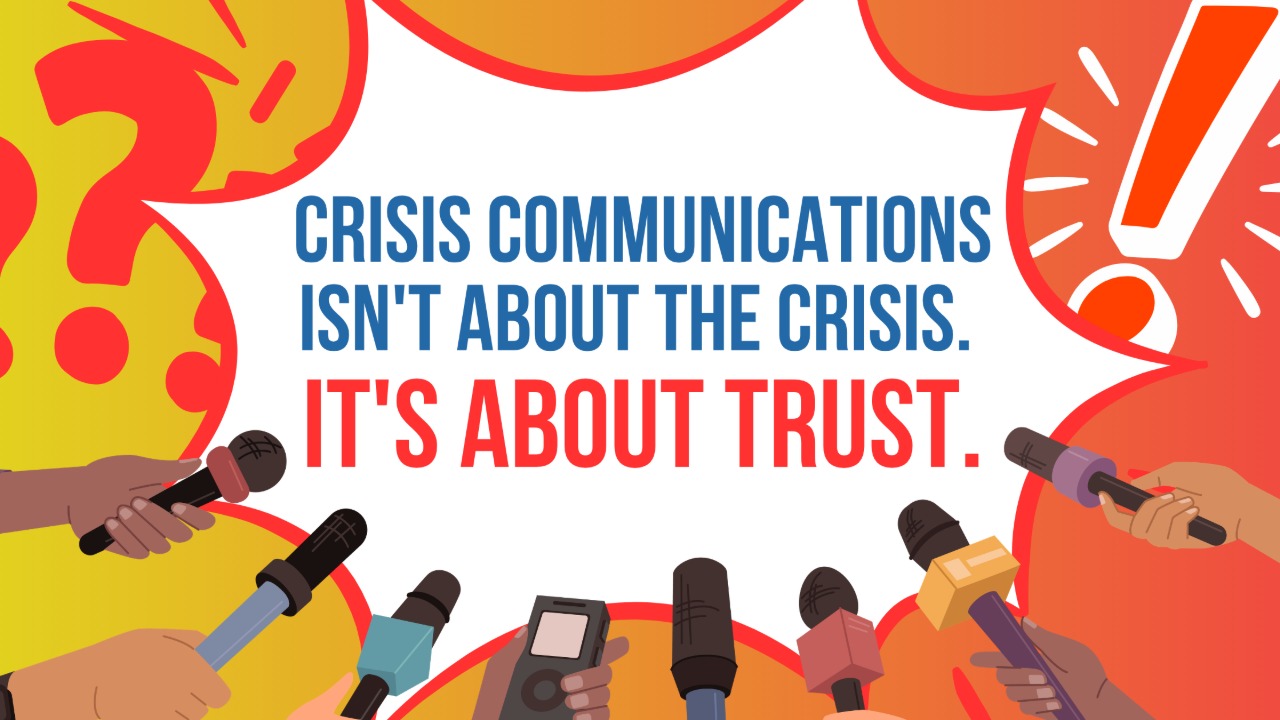
Crisis Communications Isn’t About the Crisis. It’s About Trust.
Topics
Categories:
A single social media post. A data breach. A workplace incident. A leadership mistake.
In today’s world, organizations can find themselves facing public scrutiny in a matter of minutes. And while many leaders focus on preventing crises, the reality is that no organization is immune to challenges.
What often separates organizations that recover quickly from those that struggle isn’t the crisis itself. It’s how they communicate through it.
That’s where crisis communications comes in.
In this guide, we’ll break down what crisis communications really is, why every organization—regardless of size—needs a plan, and the key components that help organizations respond with confidence when the unexpected happens.
What Is Crisis Communications?
At its core, crisis communications is the process of communicating with stakeholders during an event that threatens an organization’s reputation, operations, finances, or safety.
It’s the framework that guides what you say, who says it, when information is shared, and how messages are delivered.
More importantly, it’s about maintaining trust.
Whether you’re communicating with employees, customers, board members, media, partners, or the public, people want the same thing during a crisis: honesty, clarity, and reassurance that someone is in control.
A crisis communications plan helps organizations provide exactly that.
Crisis Communications vs. Public Relations
People often use these terms interchangeably, but they’re very different disciplines.
Public relations focuses on building reputation over time. It’s proactive, strategic, and centered on storytelling.
Crisis communications focuses on protecting reputation when something goes wrong. It’s reactive, time-sensitive, and often unfolds under intense scrutiny.
One helps build trust.
The other helps preserve it.
Organizations need both.
What Actually Qualifies as a Crisis?
Not every problem becomes a crisis.
A crisis is any event that creates significant risk to an organization’s reputation, operations, stakeholders, or long-term viability.
That can include:
- Data breaches and cybersecurity incidents
- Product recalls
- Workplace accidents
- Executive misconduct
- Financial challenges
- Community backlash
- Natural disasters
- Social media controversies
The common denominator isn’t the event itself. It’s the potential impact and the limited time available to respond.
Why Every Organization Needs a Crisis Communications Plan
One of the biggest misconceptions we hear is, “We’ll figure it out if something happens.”
The challenge is that crises rarely happen when people are calm, rested, and thinking clearly.
They happen when emotions are high, information is incomplete, and decisions need to be made quickly.
That’s why planning matters.
Speed Builds Confidence
The first few hours of a crisis often shape public perception.
Organizations that respond quickly and transparently are more likely to maintain stakeholder trust than organizations that go silent or appear disorganized.
A documented plan allows teams to act immediately instead of spending valuable time deciding what to do next.
Consistency Protects Credibility
When multiple leaders communicate without coordination, conflicting messages often follow.
Confusion creates opportunities for rumors, misinformation, and unnecessary reputational damage.
A crisis plan ensures everyone is working from the same information and delivering a consistent message.
Clarity Reduces Chaos
One of the most overlooked benefits of crisis planning is internal alignment.
Who approves statements?
Who talks to the media?
Who updates employees?
Who communicates with customers?
These questions should never be answered in the middle of a crisis.
The best plans establish roles and responsibilities before they’re needed.
What Every Crisis Communications Plan Should Include
A strong crisis communications plan isn’t a binder that sits on a shelf. It’s a practical tool designed to help leaders make decisions under pressure.
Here are the essential components.
Defined Spokespeople
Identify primary and backup spokespeople before a crisis occurs.
Not everyone should be authorized to speak publicly, and those who are should receive media and message training.
The goal is to ensure your organization speaks with one voice.
Clear Approval Processes
In a crisis, delays can be costly.
Organizations should establish streamlined approval processes that balance speed, accuracy, and legal considerations.
The objective isn’t perfection.
It’s timely and credible communication.
Stakeholder Prioritization
Not all audiences need the same information at the same time.
Your plan should identify key stakeholder groups, including:
- Employees
- Customers and clients
- Board members and investors
- Government agencies and regulators
- Community partners
- Media outlets
Understanding who needs information first helps organizations communicate strategically instead of reactively.
Communication Channels
Different audiences require different communication channels.
Internal audiences may need email, text alerts, or messaging platforms.
External audiences may rely on your website, social media channels, press releases, or direct outreach.
Knowing where communication will occur before a crisis saves valuable time.
Message Templates
While every crisis is unique, many initial responses follow a similar structure.
Pre-approved holding statements can help organizations acknowledge a situation quickly while facts are still being gathered.
A simple acknowledgment often goes a long way:
“We are aware of the situation, actively gathering information, and will provide updates as soon as more details become available.”
Templates create speed without sacrificing accuracy.
Monitoring and Listening
Organizations can’t respond effectively if they don’t know what’s being said.
Monitoring news coverage, social conversations, and stakeholder sentiment helps leaders identify emerging issues and correct misinformation before it spreads.
Post-Crisis Evaluation
Every crisis provides lessons.
After the situation has stabilized, teams should review what worked, what didn’t, and where improvements can be made.
The strongest crisis plans are living documents that evolve over time.
How to Get Started
You don’t need a large communications department to build a crisis communications plan.
Start with the basics:
- Identify your most likely risk scenarios.
- Assign spokesperson and approval roles.
- Map key stakeholder groups.
- Determine primary communication channels.
- Develop holding statements.
- Establish monitoring practices.
- Review and update the plan annually.
The goal isn’t to predict every possible scenario.
It’s to create a framework that helps your team respond with confidence when challenges arise.
The Bottom Line
No organization can prevent every crisis.
But every organization can be prepared for one.
Crisis communications isn’t simply about managing headlines. It’s about protecting relationships, maintaining trust, and demonstrating leadership when people need it most.
The organizations that navigate difficult moments most effectively aren’t necessarily the ones with the fewest problems.
They’re the ones that prepared before those problems arrived.
About Siarza
At Siarza, we help organizations build, protect, and strengthen their brands through strategic communications, crisis preparedness, public relations, digital marketing, and creative services.
Whether you’re developing your first crisis communications plan or strengthening an existing strategy, our team can help you prepare for the moments that matter most.